Working on an active military installation is unlike any other construction environment. The gates are controlled. The project specifications are rigid. The timeline is enforced by the prime contract and, increasingly, by operational requirements that have nothing to do with your schedule of values. Every subcontractor on the site is evaluated not only on whether they deliver the work, but on how they deliver it, how well they conform to specifications, and how cleanly their performance reads in the record that follows the prime contractor into the next bid cycle.
For prime contractor project managers executing federal and military infrastructure work across North Carolina, South Carolina, Virginia, and the broader Eastern US, subcontractor reliability is not a soft consideration. It is a direct input into competitive positioning. A seeding or erosion control subcontractor who creates compliance issues, misses security protocols, or fails to meet spec on a federal job does not just delay a schedule. They affect the prime’s CPARS rating and, by extension, the prime’s ability to win future awards.
This article outlines what prime contractors should understand about erosion control on active federal installations, where the work differs from a commercial site, and what to look for in a subcontractor capable of operating within military-grade standards.
Why Erosion Control on Military Installations Requires Specialized Expertise
Erosion control on a military base is governed by a different set of operational realities than commercial work. The site is active. Personnel movement, training exercises, and mission-critical operations do not pause for your subcontractor’s schedule. Access to specific zones may be controlled by unit commanders, and the timing of an application may be dictated by operational security rather than by weather or the construction sequence.
Project specifications are typically written to Unified Facilities Guide Specification standards, which are significantly more prescriptive than the specifications on a typical commercial site. Seed mixes must be specified native or approved species. Application rates, mulch coverage, and soil amendment requirements are defined within tight tolerances. Acceptance criteria for vegetation establishment are measurable and enforced. A subcontractor who treats a federal seeding spec like a commercial seeding spec will fail inspection.
There is also an institutional knowledge component. Contractors who have worked on federal installations understand the documentation cadence, the quality control reporting required, the daily production report format, and the coordination protocols with installation environmental offices. Contractors new to this environment tend to learn these requirements by failing them, which is an unacceptable outcome for the prime contractor overseeing them.
Security, Compliance, and Operational Constraints on Active Bases
Security is the first operational constraint that separates federal work from everything else. Every person and every vehicle entering the installation must be cleared in advance. Background checks, base access credentials, and vehicle inspections are standard. For a seeding subcontractor mobilizing a crew, a water truck, and a hydroseeder onto a federal site, the access process is a project in itself, and it must be managed proactively or it will cost days on the schedule.
Operational constraints extend well beyond the gate. Work windows may be restricted to specific hours to avoid conflict with base operations. Staging areas may be limited and subject to relocation. Communication protocols may require radio discipline or specific reporting channels. Environmental protocols may restrict chemical applications near sensitive training areas, water bodies, or endangered species habitat, all of which are more common on military installations than on commercial sites.
Compliance documentation on federal projects is also substantially more rigorous. Daily quality control reports, contractor performance reports, and environmental compliance documentation must be maintained and submitted according to the contract’s specific requirements. Gaps in documentation are treated with the same seriousness as gaps in field performance.
A subcontractor who has not internalized these constraints creates friction for the prime contractor at every stage of the work. A subcontractor who has is nearly invisible in the project record, which is exactly what the prime wants.
How Erosion Control Performance Affects Your CPARS Rating
The Contractor Performance Assessment Reporting System, or CPARS, is the federal government’s system for documenting prime contractor performance on government contracts. Ratings cover quality, schedule, cost control, management, regulatory compliance, and other factors. CPARS narratives follow a prime contractor from project to project and are a material input into source selection decisions on future awards.
Erosion control and site stabilization work show up in CPARS in several ways. Failed stormwater inspections generate regulatory compliance findings. Vegetation that does not establish by the acceptance milestone generates schedule and quality findings. Re-work driven by subcontractor error can affect cost control ratings. And the cumulative effect of these findings on a single project can pull a CPARS rating from exceptional to satisfactory, or from satisfactory to marginal, with direct consequences for the prime’s competitive position in the next solicitation.
The implication for prime contractor project managers is that subcontractor selection on erosion control and seeding scopes is a CPARS decision, not just a cost decision. A subcontractor whose bid comes in slightly lower but who produces a failed inspection or a missed vegetation establishment milestone is not a savings. They are a CPARS liability that compounds across future bids.
Specialized Applications for Federal Sites Including Grass Pavers and Compost Blankets
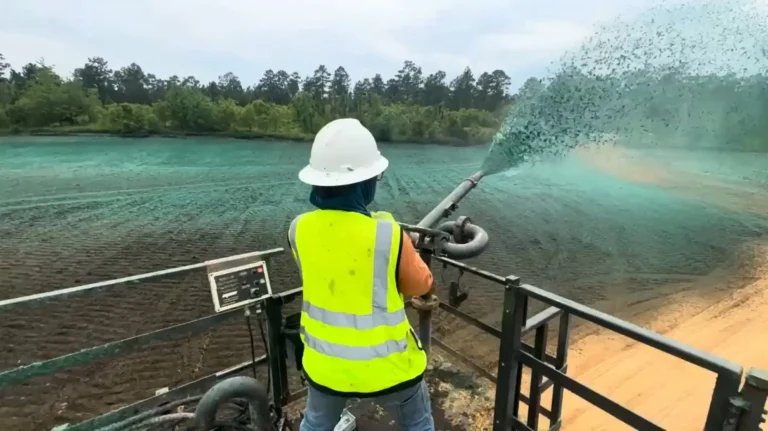
Federal installations frequently require erosion control techniques beyond the standard hydroseed-and-mulch approach used on typical commercial sites. Project specifications reflect the operational requirements of an active base, and the techniques deployed must meet both the immediate stabilization objective and the longer-term functional requirements of the installation.
Grass pavers are one such specialized application. On federal sites where light to medium vehicle access is required across a vegetated surface, such as perimeter roads, emergency access routes, or utility corridors, grass pavers provide a stabilized structural surface that supports traffic while allowing vegetation to establish and persist. Specifying and installing grass pavers to military spec requires experience that most commercial erosion control contractors do not have.
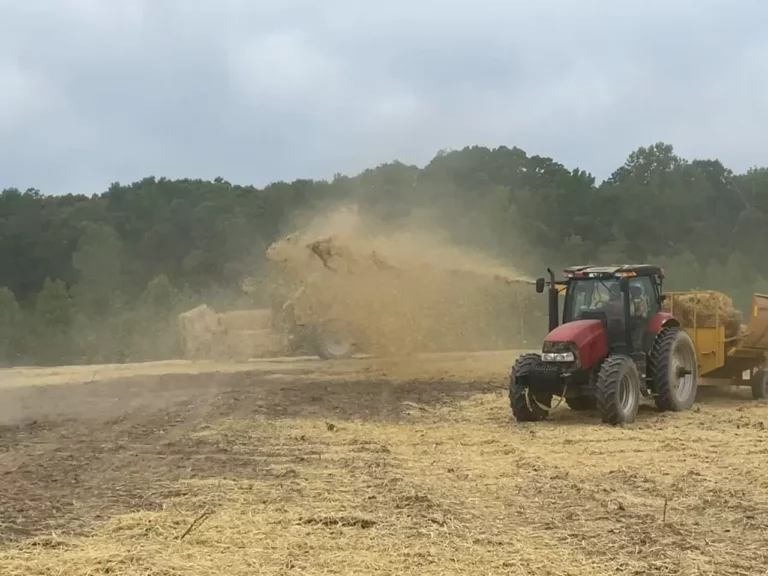
Compost blankets are another technique that sees heavy use on federal work. On steep slopes, spoil piles, or sensitive sites where immediate surface protection is non-negotiable, compost blankets deliver erosion control, moisture retention, and soil amendment in a single application. The organic matter content supports the deep-rooted vegetation establishment that federal specifications typically require, rather than the surface-level cover that straw mulch produces.
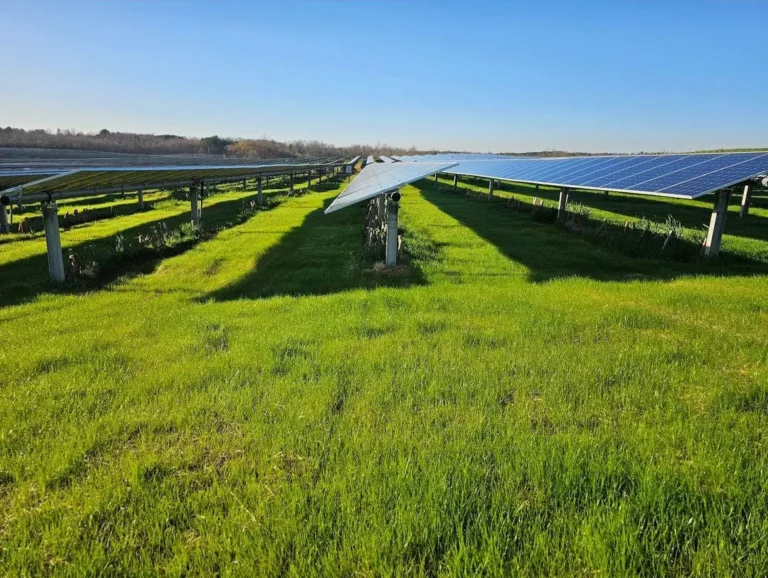
Site-specific seed mixes round out the federal specification toolkit. Installations frequently require native species blends, pollinator-friendly mixes, or mixes designed to suppress invasive species that have been identified on the installation’s natural resources management plan. A subcontractor who defaults to a generic commercial mix on a federal site will not pass inspection.
Eco Express’s Track Record on High-Security Federal Projects
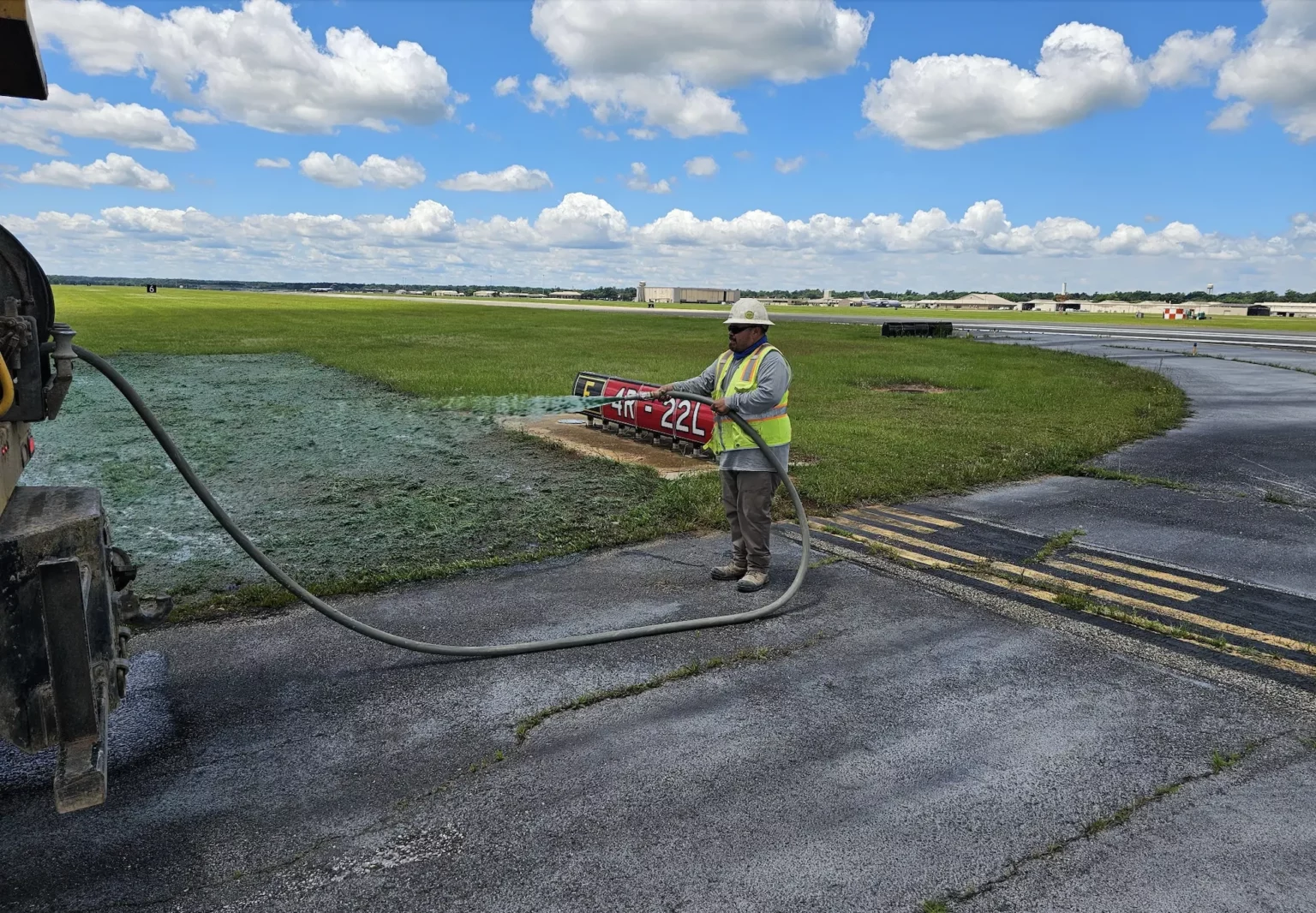
Eco Express has worked on high-security federal sites across the Eastern US, including projects at Camp Lejeune, where the company has delivered erosion control and seeding services within the operational constraints of an active Marine Corps installation. That work required full compliance with installation access protocols, quality control documentation, and project specifications written to federal standards.
The company brings three capabilities that matter on military and federal work. The first is industrial-scale equipment capacity, which allows the company to handle multi-hundred-acre scopes on federal infrastructure projects without subcontracting portions of the work to smaller operators. The second is technical depth, including pioneering use of compost blankets, exclusive use of CarbonizPN from Mirimichi Green for soil revitalization, and experience with grass pavers and specialized seed mix specifications. The third is operational discipline, including the access coordination, documentation, and reporting protocols that federal work demands.
For prime contractors bidding federal and military infrastructure work across North Carolina, South Carolina, Virginia, and the Eastern US, Eco Express operates as a subcontractor that fits cleanly into a prime’s project management framework, meets specification without rework, and produces the performance record that supports strong CPARS ratings. The company has been serving the erosion control and seeding industry since 2003, with a substantial portion of that work delivered on federal and military projects.
Bidding a federal or military project that requires specialized erosion control expertise? Contact Eco Express to discuss your project specifications and confirm subcontractor fit.
Frequently Asked Questions
What makes erosion control on a military base different from a commercial site?
Military installations require contractors to meet strict access and security protocols, adhere to project specifications written to Unified Facilities Guide Specification standards, and operate within the constraints of an active base where civilian access is controlled and operational priorities supersede contractor schedules. Documentation and quality control reporting requirements are substantially more rigorous than on commercial work, and the margin for error on specification compliance is significantly smaller. A subcontractor without direct federal experience will typically find these requirements difficult to meet on the first project.
What is a CPARS rating and why does it matter?
The Contractor Performance Assessment Reporting System, or CPARS, is the federal government’s official system for documenting prime contractor performance across quality, schedule, cost control, management, and regulatory compliance. CPARS ratings follow a prime contractor through the federal market and are a material input into source selection on future contract awards. Subcontractor performance on erosion control, seeding, and stormwater compliance flows directly into these ratings, which makes subcontractor selection on federal work a CPARS decision rather than purely a pricing decision.
Has Eco Express worked on active military installations?
Yes. Eco Express has a track record of successful project delivery on high-security federal sites, including work at Camp Lejeune. The company’s personnel and operations are equipped to meet the access protocols, project specifications, and quality control documentation requirements of active military environments. Eco Express operates across North Carolina, South Carolina, Virginia, and the broader Eastern US, and has been serving the federal and military infrastructure market as part of its broader service offering since 2003.
What specialized erosion control techniques are used on federal projects?
Federal sites frequently require techniques beyond standard hydroseeding, including grass pavers for vehicle-compatible vegetated surfaces, high-performance compost blankets for immediate slope stabilization and soil amendment, site-specific seed mixes that meet native species or invasive suppression requirements, and soil revitalization using amendments such as CarbonizPN from Mirimichi Green. Specifying and applying these techniques to federal specification tolerances requires direct experience that most commercial erosion control contractors do not have.
Can Eco Express serve as a subcontractor on large government contracts?
Yes. Eco Express regularly partners with prime contractors on federal and military infrastructure projects, providing specialized seeding, soil revitalization, and erosion control services within the prime contractor’s project management framework. The company brings industrial-scale equipment capacity, full documentation discipline, and experience operating on active installations, and is structured to integrate cleanly into a prime’s schedule, quality control program, and reporting requirements.