A utility-scale solar facility operates for 25 to 35 years. For every one of those years, the site has to maintain vegetation that controls erosion, manages stormwater, and stays out of the way of the panels. Nobody sells a solar project on the vegetation maintenance line item, but that line item shows up on the operations and maintenance budget every year for the life of the facility, and on a site of several hundred acres, it accumulates into a material number over the asset’s operating life.
Solar developers and directors of construction running portfolios across North Carolina, South Carolina, Virginia, and the broader Eastern US are increasingly treating ground cover not as a construction close-out activity but as a long-term operating expense to be engineered down at the outset. Developers who get the initial seeding and erosion control right see measurably lower ongoing vegetation costs. Developers who do not are absorbing years of re-application, remediation, and intensive management that was preventable at the seeding stage.
This article examines the long-term maintenance problem facing solar developers and how a soil-health-first approach to initial establishment reduces lifecycle cost on a utility-scale footprint.
The 25-Year Maintenance Problem Facing Solar Developers
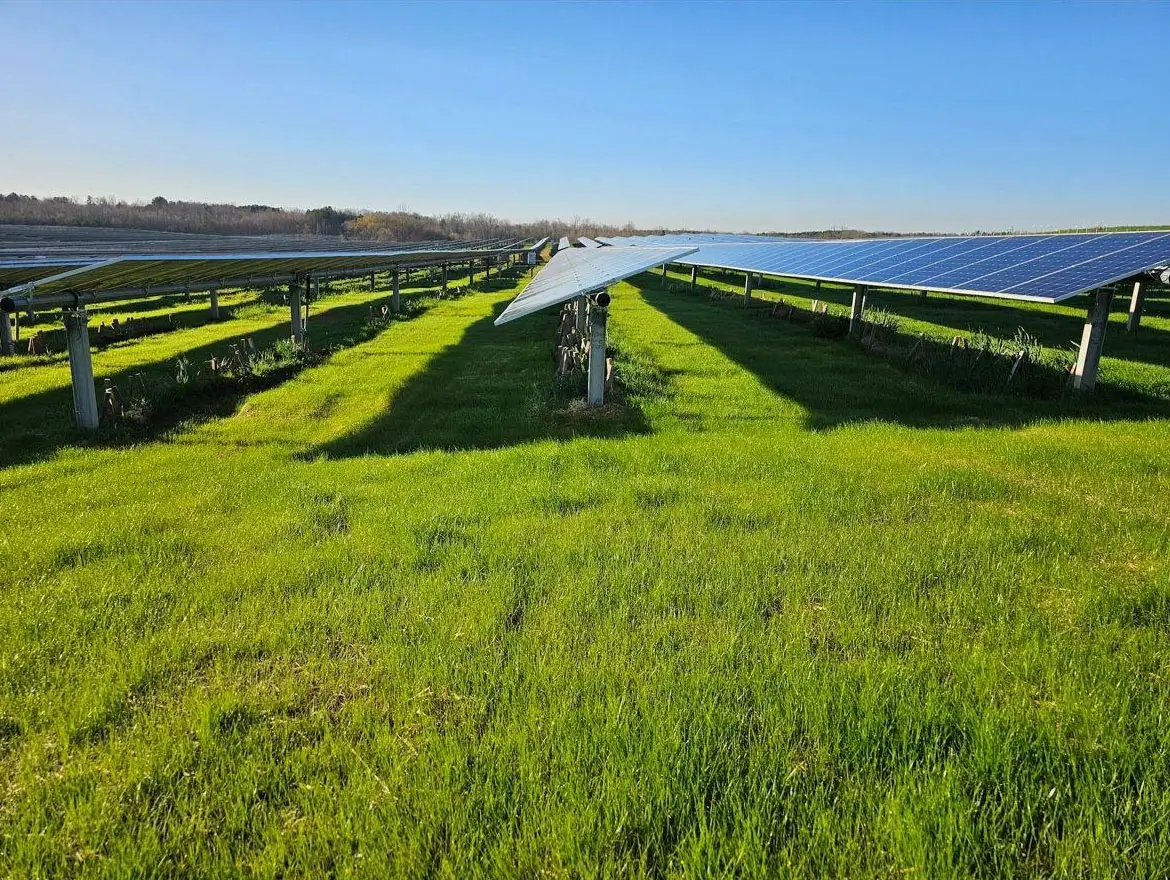
The operational requirement for vegetation on a solar site is unusual compared to other forms of commercial development. Vegetation must be continuously present to meet stormwater permit conditions and to stabilize the soil underneath and around the panels. It must also be continuously managed so that it does not grow into the panels, shade the array, or create access and maintenance problems for the O&M team.
Over a 25 to 35 year operating life, that balance has to be maintained through every growing season, every drought, every wet year, and every change of ownership. Each of those conditions can disrupt the stand of vegetation established at construction, and each disruption requires intervention.
The maintenance profile breaks down into several recurring cost categories. Mowing is the most visible, typically performed multiple times per growing season across the full site footprint. Re-seeding is required where the original stand has thinned or failed, which is common on sites where establishment was compromised by poor soil at the outset. Fertilizer or amendment applications may be required to sustain a stand on depleted soil. Erosion remediation is required where loss of ground cover has produced rills, gullies, or sediment migration. And compliance-driven re-stabilization is required if any of the preceding issues lead to a stormwater inspection finding.
Each of these cost categories recurs annually or on a multi-year cycle for the entire operating life of the facility. On a 200 or 300 acre site, the cumulative exposure over three decades is substantial.
Why Conventional Seeding Creates a Cycle of Re-Application
The underlying reason many solar sites carry high long-term vegetation costs is that the initial seeding was performed on soil that could not support a durable stand. Large-scale solar development strips topsoil, compacts subsoil, and leaves behind a growing medium that is low in organic matter, low in microbial activity, and structurally poor for root development.
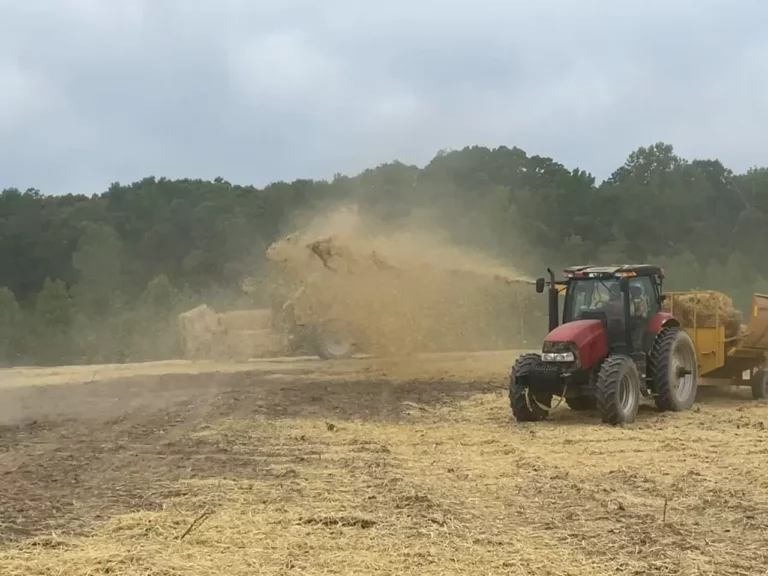
When conventional hydroseeding is applied to soil in this condition, the outcome is predictable. Germination rates are inconsistent. Early growth is shallow. The first stress event — a hot summer, a dry September, a heavy rain on a bare slope — takes out portions of the stand. The site enters a re-application cycle that continues for years, with each round of seeding applied to soil that has not meaningfully improved since the last round.
This is how ongoing vegetation costs compound. Each re-seeding event carries direct material and labor cost. Each interim period of degraded cover raises compliance exposure and erosion risk. Each year of intensive management on a soil that does not independently support vegetation adds to the O&M burden. The root cause is not the seed mix or the application technique. It is the soil.
How Soil Health Drives Long-Term Vegetation Performance
Permanent vegetation establishment depends on a soil system that supports deep root development, efficient nutrient cycling, and sustained biological activity. When these conditions are in place, vegetation transitions from a stand that requires ongoing intervention to a stand that self-sustains through normal seasonal cycles.
The practical lever for achieving these conditions on graded solar sites is microbial soil revitalization. Eco Express uses CarbonizPN from Mirimichi Green as the core amendment in its soil revitalization program. CarbonizPN provides a concentrated, biochar-based carbon source that supports the reestablishment of beneficial microbial communities in soils that have been stripped and compacted during construction. The effect is measurable in root depth, vegetation density, moisture retention, and the persistence of the stand through the years that follow.
The operational implication is straightforward. Soil that has been properly revitalized at the seeding stage produces vegetation that requires less intervention over the life of the site. Mowing schedules may remain similar, because mowing is driven by growth rate, but re-seeding frequency drops, fertilizer and amendment requirements drop, erosion remediation drops, and compliance exposure drops. The ongoing O&M line item is smaller because the underlying biological system is doing more of the work that would otherwise require contractor intervention.
Calculating the Lifecycle Cost Difference on a 100+ Acre Site
The most useful way to think about the economics of soil health on a solar project is not in terms of the seeding contract but in terms of the 25-year operating budget.
On a 100 to 300 acre site, the initial seeding contract is a single-digit percentage of total site development cost, and soil revitalization adds a modest increment to that contract. The cost difference at construction is small relative to the overall capital budget.
The ongoing maintenance line item is a different story. Every avoided re-seeding cycle across the operating life of the site is a substantial saving. Every year of reduced fertilizer and amendment application compounds. Every avoided erosion remediation event eliminates both the remediation cost and the compliance exposure that triggered it.
The lifecycle calculation developers increasingly run is whether the marginal cost of a soil-health-first seeding specification is recovered through reduced ongoing costs. On sites with challenging subsoil conditions, which describes most utility-scale solar sites across North Carolina, South Carolina, Virginia, and the Eastern US, the payback window is typically short and the cumulative lifecycle saving is substantial.
Risk also belongs in the calculation. Ongoing vegetation failure is a compliance category, a reputational category, and in some cases a power purchase agreement performance category. Developers managing portfolios understand that consistent, durable vegetation performance has value that extends beyond the line-item O&M saving.
What Eastern US Solar Developers Should Require from Their Seeding Contractor
Developers evaluating seeding contractors for utility-scale solar work should focus on a few specific capabilities that separate durable establishment from short-term cover.
The first is soil-level intervention. A contractor who treats seeding as a surface application only is going to produce the same re-application cycle on your site that other developers have been living with for years. A contractor who addresses soil health at the microbial level before or during seeding is going to produce a stand that persists.
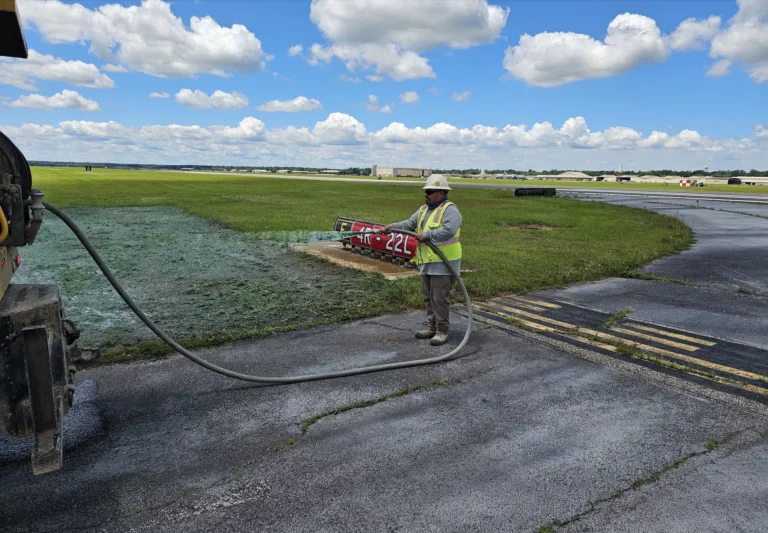
The second is industrial-scale capacity. A 200 or 500 acre site cannot be efficiently seeded by a contractor sized for residential or small commercial work. Equipment capacity, crew size, and operational discipline all need to match the footprint. Slow mobilization and prolonged application windows create compliance exposure that compounds.
The third is regional experience. Soil conditions, climate zones, seed mix requirements, and regulatory frameworks all vary across North Carolina, South Carolina, Virginia, and the rest of the Eastern US. A contractor who has been operating in the region continuously is significantly better positioned to specify correctly on the first attempt than one who is new to the geography.
Eco Express has served the utility-scale solar industry across the Eastern US since 2003. The company’s approach starts with soil health, using CarbonizPN from Mirimichi Green as the foundation of its soil revitalization program, then layers in high-capacity hydroseeding, compost blankets for slope stabilization, and integrated site grading where required. For solar developers focused on reducing the 25-year vegetation maintenance burden on their portfolios, this combination is purpose-built for the Eastern US solar market.
Planning a utility-scale solar project or reviewing O&M performance on an existing portfolio? Contact Eco Express to discuss soil-health-first vegetation establishment across the Eastern US.
Frequently Asked Questions
How long does vegetation need to be maintained on a utility-scale solar site?
Utility-scale solar facilities typically operate for 25 to 35 years, and vegetation must be maintained throughout the operational life of the facility to control erosion, manage stormwater discharges under the site’s NPDES permit, and prevent interference with panel performance. This long operational horizon is what makes the quality of initial vegetation establishment a material factor in lifecycle cost. Vegetation that establishes poorly at construction generates a recurring maintenance burden that persists for decades, while vegetation established on biologically healthy soil tends to be self-sustaining with significantly less intervention.
How does microbial soil revitalization reduce maintenance costs?
Microbial soil revitalization, using amendments such as CarbonizPN from Mirimichi Green, restores the biological activity required for deep root development, nutrient cycling, and structural soil recovery. Soil treated this way supports vegetation that establishes deeper, persists longer, and withstands seasonal stress more reliably than vegetation grown on untreated subsoil. The practical effect is reduced re-seeding frequency, reduced fertilizer and amendment applications, reduced erosion remediation, and reduced compliance exposure across the operational life of the site, each of which compounds into a lower total maintenance cost.
What does a typical re-seeding cycle cost on a large solar site?
The direct cost of re-seeding a 100 to 300 acre solar site varies with site size, soil condition, seed mix, and stabilization requirements, but it represents a material line item each time it is required. The direct cost is only part of the exposure. Additional costs include equipment mobilization, interim erosion remediation on any areas that degraded before re-application, and in some cases regulatory remediation costs if the loss of cover triggered a stormwater inspection finding. Across a 25 to 35 year operating life, avoided re-seeding cycles compound into a substantial lifecycle saving.
Does Eco Express provide ongoing vegetation management after initial seeding?
Eco Express’s focus is on getting the initial establishment right by addressing soil health at the microbial level and specifying the application technique that fits the site conditions. This approach is designed to minimize the need for ongoing contractor intervention on vegetation. The company can advise on long-term management strategies and will consult on O&M issues where initial establishment has not been optimal, but the operating model is structured to reduce the ongoing maintenance burden rather than to create a recurring service relationship around it.
Are there specific seed mixes recommended for solar sites in the Carolinas and Virginia?
Yes. Seed mix selection depends on the specific region, climate zone, soil type, site aspect, and regulatory or PPA-driven requirements. Solar sites in the Carolinas and Virginia typically call for low-growing, non-competitive species that provide durable ground cover without requiring excessive mowing or growing into the panel array. Eco Express works with each client to specify a mix that fits the site conditions and meets the vegetation establishment standards required by the project’s permits and contracts. Mix selection is paired with soil revitalization and application technique to support durable establishment from the first attempt.