If you manage construction on utility-scale solar sites, you have almost certainly dealt with this scenario. The grading is complete, the seeding crew has come and gone, and three months later the site is still mostly bare dirt. The seed either never germinated or washed off the slopes during the first heavy rain. The stormwater inspector is asking questions. The environmental permit is at risk. And the seeding contractor is back out to do the same thing again, on the same soil, expecting a different result.
Repeated seeding failure is one of the most common and most expensive problems on large-scale solar projects across North Carolina, South Carolina, Virginia, and the broader Eastern US. It creates a cycle of re-application costs, compliance exposure, and schedule disruption that compounds over the life of a project measured in decades.
The problem is not the seed. The problem is the soil. And until the soil is addressed at the biological level, no amount of re-seeding will produce permanent results.
Why Conventional Seeding Falls Short on Utility-Scale Solar Sites
Conventional hydroseeding is a proven technique for establishing vegetation on disturbed ground. It works well on sites where the soil retains enough organic matter, structure, and biological activity to support germination. The difficulty on utility-scale solar sites is that these conditions rarely exist by the time seeding begins.
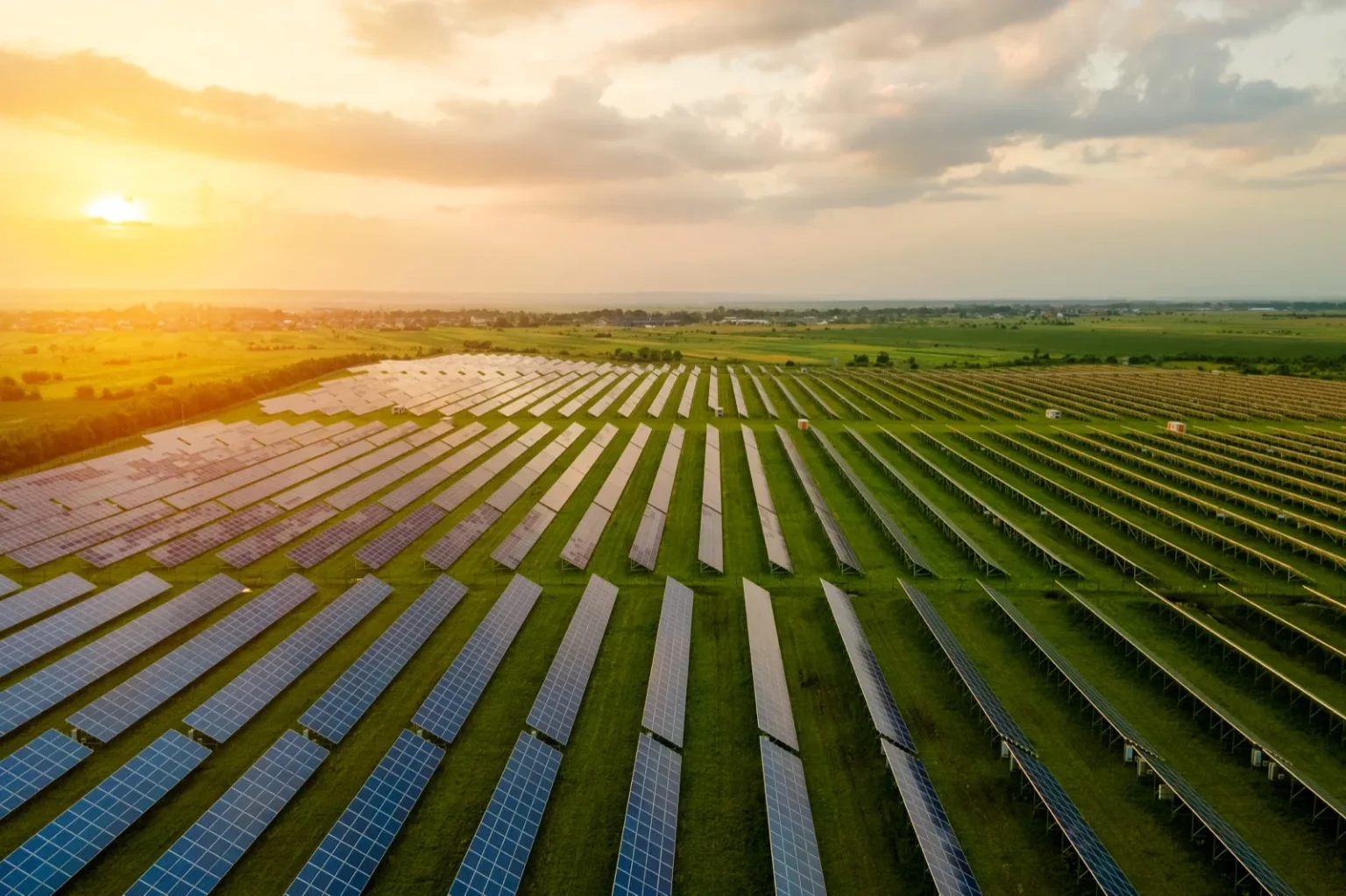
Solar development at scale requires substantial earthwork. Sites of 100 to 500 acres or more undergo extensive clearing, grubbing, and grading to create level surfaces for panel installation. This process strips away the topsoil layer — the six to twelve inches of biologically active earth that contains the organic matter, nutrients, and microbial communities that make vegetation possible.
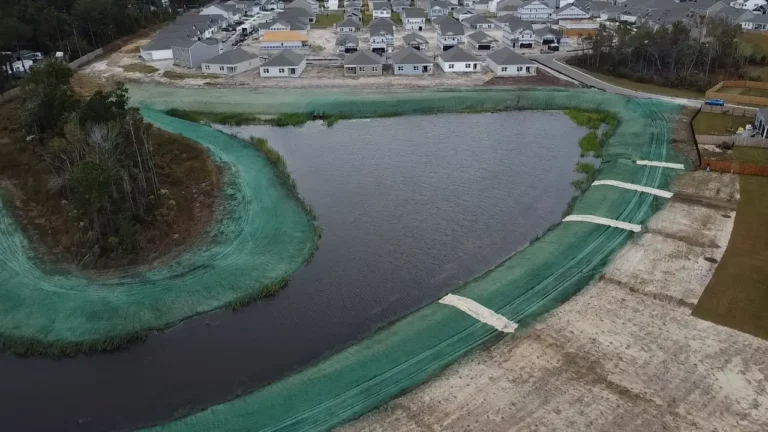
What remains is compacted subsoil. It is dense, low in organic content, and largely devoid of the microbial life that drives nutrient cycling and root establishment. Seed applied to this surface may sprout initially — surface moisture and tackifier in a standard hydroseed mix can produce a brief flush of green. But without microbial activity to cycle nutrients and without soil structure that allows roots to penetrate, that initial growth dies back. The next rain event washes loose seed and shallow-rooted seedlings off exposed slopes, and the site returns to bare ground.
This is not a seeding failure. It is a soil failure. And the conventional response — re-applying the same seed to the same depleted soil — does not address the root cause.
The Soil Problem That Most Seeding Contractors Overlook
Most seeding contractors focus on what goes on top of the soil: seed mix selection, application rates, mulch type, and tackifier coverage. These factors matter. But they are secondary to a more fundamental question: can this soil sustain plant life?
Healthy soil is a living system. It contains billions of microorganisms per gram — bacteria, fungi, protozoa, and other organisms that decompose organic matter, cycle nutrients, and create the soil structure that allows water infiltration and root penetration. When topsoil is removed during grading, this biological community is removed with it. Compacted subsoil does not regenerate microbial life on its own within any useful project timeline. Left untreated, it can take years or decades for biological activity to rebuild naturally.
This is the gap that most seeding operations overlook. They treat the surface symptoms — lack of ground cover, exposed soil, erosion — without addressing the biological deficit underneath. The result is a cycle of application, failure, and re-application that drives up costs and prolongs compliance exposure on every acre.
How CarbonizPN Restores Microbial Activity and Supports Permanent Vegetation
Closing the soil health gap requires an intervention at the microbial level. This is where CarbonizPN from Mirimichi Green changes the equation for utility-scale solar sites.
CarbonizPN is a soil amendment specifically designed to restore biological activity in depleted and disturbed soils. It introduces a concentrated source of biochar-based carbon that provides habitat and food sources for beneficial soil microorganisms. When applied to compacted subsoil, it accelerates the reestablishment of the microbial communities responsible for nutrient cycling, organic matter decomposition, and soil structure development.
The practical effect is significant. Soil treated with CarbonizPN develops the biological capacity to support seed germination and sustained root growth in a fraction of the time it would take for natural recovery. Roots penetrate deeper. Moisture retention improves. Nutrient availability increases. The vegetation that establishes is deep-rooted, permanent ground cover that stabilizes the site for the long term.
For solar project managers, this translates directly into fewer seeding applications, faster permit compliance, and dramatically lower vegetation maintenance costs over the 25 to 35 year operational life of a solar facility. Eco Express uses CarbonizPN exclusively in its soil revitalization programs — a targeted, lab-backed intervention that addresses the specific biological deficit created by large-scale grading operations.
What Permanent Establishment Means for Long-Term Site Costs
The financial case for soil revitalization is straightforward. Every failed seeding application on a utility-scale site represents a direct cost in materials, labor, and equipment mobilization. On a 200-acre solar farm, a single re-seeding cycle is a substantial line item. Two or three cycles, which is not uncommon on sites with severely depleted soil, can represent a material portion of the overall site development budget.
Beyond the direct re-application costs, failed seeding creates exposure on multiple fronts. Bare soil on an active construction site is a stormwater compliance liability. NPDES permits require stabilization within defined timeframes, and every week of exposed ground increases the risk of an inspection failure or a notice of violation.
There is also the long-term maintenance dimension. Solar facilities operate for decades, and vegetation that is poorly established from the outset requires ongoing intervention — mowing, re-seeding, fertilizer applications, and erosion remediation — for the entire operational life of the project. Permanent vegetation established through microbial soil revitalization reduces or eliminates each of these cost categories.
What Solar Developers in the Carolinas and Virginia Should Expect from a Seeding Partner
The utility-scale solar market in North Carolina, South Carolina, and Virginia continues to grow, and the solar farm erosion control challenges on these sites are well documented. Developers managing large portfolios across the region need a seeding partner that understands both the scale of the work and the science behind permanent vegetation establishment.
That partner should bring industrial-scale equipment capable of covering multi-hundred-acre sites efficiently. They should have direct experience with the soil conditions, climate zones, and regulatory frameworks specific to the Carolinas and Virginia. And they should be using proven soil amendment technology — not just applying seed and hoping the soil cooperates.
Eco Express has served the utility-scale solar industry across the Eastern US since 2003. The company’s approach starts with the soil, using CarbonizPN from Mirimichi Green to restore microbial health before seed is applied. Combined with high-capacity hydroseeding equipment, compost blanket technology for immediate slope stabilization, and integrated site grading capabilities, it is a model built to deliver permanent results on the most demanding sites in the region.
If your solar sites are stuck in a cycle of re-seeding, or if you are planning a new project and want to get vegetation right the first time, a conversation about soil health is the most productive starting point.
Ready to eliminate repeated seeding failures on your next solar project? Contact Eco Express to discuss your site conditions and learn how microbial soil revitalization delivers permanent vegetation establishment across the Carolinas, Virginia, and the Eastern US.
Frequently Asked Questions
Why does seeding fail so often on solar farm sites?
Large-scale solar development requires extensive grading that strips away topsoil and compacts the subsoil beneath. The remaining soil typically lacks the microbial activity, organic matter, and physical structure needed to support seed germination and sustained root growth. Without these biological foundations, seed either fails to germinate, produces only shallow surface growth, or washes off exposed slopes during rain events, leading to a cycle of repeated applications.
What is CarbonizPN and how does it improve seeding results?
CarbonizPN is a soil amendment produced by Mirimichi Green that restores biological health at the microbial level. It provides a concentrated, biochar-based carbon source that creates habitat and food for beneficial soil microorganisms. When applied to depleted or compacted soils, it accelerates the reestablishment of microbial communities responsible for nutrient cycling and soil structure development. The result is soil that can support deep-rooted, permanent vegetation rather than the shallow, temporary growth that conventional seeding produces on degraded substrates.
How many seeding applications are typically needed on a solar site?
With conventional methods applied to depleted soil, many utility-scale solar sites require two or more re-applications before vegetation establishes. Each cycle adds direct costs in materials and labor, extends compliance timelines, and increases stormwater permit exposure. By addressing soil health at the microbial level before seeding, Eco Express’s approach significantly reduces the likelihood of re-application and the associated costs and schedule delays.
Does Eco Express work on solar sites across multiple states?
Yes. Eco Express serves utility-scale solar projects across North Carolina, South Carolina, Virginia, and the broader Eastern US. The company operates high-capacity industrial equipment designed for sites of 100 acres or more, and has the operational experience to navigate the specific soil conditions, climate zones, and regulatory requirements across each of these markets. Eco Express has been serving the utility-scale solar and energy industries across the Eastern US since 2003.
How does permanent vegetation help with stormwater compliance on solar sites?
Established vegetation is one of the most effective forms of erosion control and stormwater management on disturbed land. It stabilizes soil, slows surface runoff, filters sediment, and reduces the volume and velocity of stormwater discharge. For solar sites operating under NPDES permits, permanent ground cover eliminates the compliance gaps that occur when seeding fails and bare soil remains exposed, reducing the risk of inspection failures, notices of violation, and associated fines.