Straw has been the default erosion control mulch on construction sites for decades, and for good reason. It is inexpensive, widely available, and familiar to every field crew that has ever held a pitchfork. On a small site with mild slopes and forgiving timelines, seed and straw often gets the job done. But on the kinds of projects that define the industrial and infrastructure pipeline across North Carolina, South Carolina, Virginia, and the Eastern US today — utility-scale solar installations, large commercial developments, federal infrastructure builds — straw is increasingly a false economy.
The reason is straightforward. The projects have changed. Slopes are steeper, timelines are tighter, compliance stakes are higher, and soil conditions after large-scale grading are routinely worse than what straw was originally designed to protect. On sites where failure triggers regulatory consequences, schedule slippage, or material re-application costs, the performance gap between compost blankets and straw has widened to the point where specifying straw on the wrong site is itself a project risk.
This article examines how the two techniques compare across the dimensions that matter — slope stabilization, vegetation establishment speed, soil health contribution, and long-term durability — and outlines when compost blankets should be specified over straw.
Why Erosion Control Method Selection Matters on High-Stakes Projects
On a low-stakes site, erosion control method selection is close to a commodity decision. The slope is gentle, the soil is reasonable, the inspection regime is lenient, and any reasonable application of seed and mulch will eventually produce ground cover.
On a high-stakes site, none of those conditions hold. A utility-scale solar project operates under an NPDES permit with defined stabilization benchmarks and active inspection. A commercial development is carrying debt and running to an opening date that cannot slip. A federal installation job is tied to specifications, acceptance criteria, and a CPARS record. In each of these contexts, the erosion control technique is not a mulch choice. It is a risk management decision.
The question becomes not which method is cheapest per acre but which method most reliably delivers the stabilization outcome within the window the project requires. When the technique fails, the costs multiply. Re-application expense, permit exposure, schedule compression, and in some cases civil penalties all compound on top of the original material cost. A technique that is ten or twenty percent more expensive up front but that cuts the re-application rate in half is a substantial net saving on any meaningful project budget.
How Traditional Straw Performs and Where It Falls Short
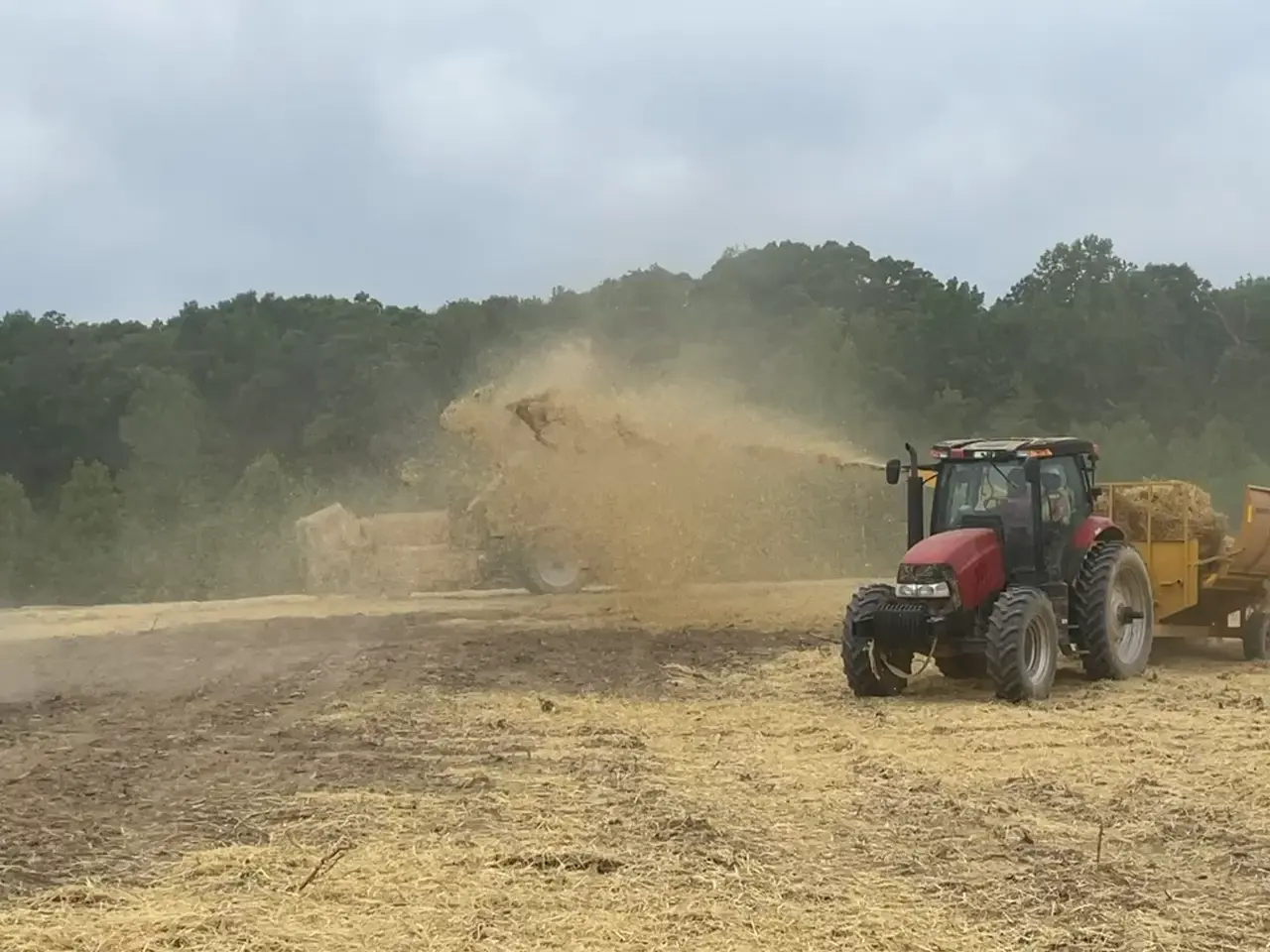
Straw mulch, applied over broadcast or hydroseeded seed and typically crimped or secured with tackifier, has genuine utility. On flat or mildly sloped sites with reasonable soil, it reduces surface erosion, retains enough moisture to support germination, and degrades over the following season to leave a functioning stand of vegetation. For that profile of site, straw is difficult to beat on cost.
The limitations begin to show as conditions become more demanding. On steep slopes, straw is prone to detachment. Wind events and intense rain can lift loose material off the surface in sheets, carrying seed with it and leaving bare ground exposed. Crimping improves anchoring but is difficult to execute uniformly on irregular grades, and tackifier alone is not always sufficient on slopes above standard grade.
Straw also offers no contribution to the underlying soil. It is a surface treatment. Once it decomposes, what remains is the original subsoil, which on a heavily graded site is typically compacted, low in organic matter, and biologically inactive. If the seed has not established deep roots by the time the straw is gone, the site reverts to bare ground. This is how sites end up in a re-seeding cycle that appears to be a seed problem but is actually a soil problem that the mulch was never going to solve.
On sites with aggressive compliance timelines, straw carries an additional risk. The technique assumes enough consecutive days of favorable weather for germination and establishment before the first significant rain event. On a site under active NPDES inspection, that assumption is not a timeline a project manager can afford to make.
What Compost Blankets Are and How They Work
A compost blanket is a layer of processed, matured compost applied to the soil surface, typically two to four inches thick, using specialized blower equipment. The compost is engineered for erosion control use, with controlled particle size, high organic matter content, and a biological profile that supports rapid vegetation establishment.
The technique performs three functions simultaneously, which is the reason it outperforms straw on demanding sites. First, it provides immediate surface protection. The blanket absorbs the impact of raindrops, dissipates surface flow, and locks the soil surface against erosive forces the moment it is applied. Unlike straw, it does not need to settle or be secured to function.
Second, it retains moisture. The organic matter content holds significantly more water than a straw layer and releases it gradually to the soil and germinating seed beneath. This produces more consistent germination conditions, which accelerates establishment and reduces the likelihood that a dry spell will stall the stand before it is durable.
Third, and most importantly on graded sites, it amends the soil. As the compost blanket begins to incorporate into the underlying soil, it contributes organic matter, microbial activity, and nutrients that support deep root development. The result is not just a stand of surface vegetation but a stand with root structure capable of persisting through the operational life of the site.
Eco Express has pioneered the use of high-performance compost blankets for erosion control across the Eastern US and has refined the specification and application for the full range of project types it serves.
Comparing Performance Across Slope Stabilization, Germination Speed, and Durability
On slope stabilization, compost blankets substantially outperform straw on grades of any consequence. The blanket bonds to the surface, does not lift in wind, and maintains uniform coverage on irregular terrain. Straw on steep slopes requires additional stabilization techniques, and even then it delivers less consistent coverage.
On germination speed, compost blankets shorten the window to visible establishment. The improved moisture retention, soil contact, and nutrient availability combine to accelerate germination and early growth. On sites where the NPDES permit or the project schedule defines a tight window to achieve stabilization, that difference is operationally significant.
On durability, compost blankets contribute to a permanent stand because they build soil as they protect it. Straw protects the surface while it is present and contributes nothing once it is gone. A compost blanket, properly specified and applied, produces ground cover that persists through the multi-decade operational life of a solar site or the long-term ownership horizon of a commercial development.
On cost per acre of material, straw is cheaper. On total cost to achieve compliant, durable stabilization on a demanding site, compost blankets are frequently the lower-cost option once re-application rates, schedule impact, and compliance exposure are accounted for.
When to Specify Compost Blankets Over Straw on Your Next Project
Compost blankets are the right specification in several specific contexts. Steep slopes are the clearest case. Any grade where straw detachment is a realistic failure mode is a slope where a compost blanket should be specified from the outset.
Projects with tight regulatory timelines are a second case. On any site where the NPDES permit or contract specifications define a stabilization window that leaves little margin for weather, re-application, or establishment delays, compost blankets reduce timeline risk.
Sites with compacted or stripped soil are a third case. Utility-scale solar projects, highway construction, large commercial developments, and federal infrastructure projects all routinely produce subsoil conditions where straw cannot address the underlying soil deficit. On these sites, compost blankets pair naturally with hydroseeding and soil amendments such as CarbonizPN from Mirimichi Green to deliver a full soil health intervention rather than a surface treatment.
Projects where failure has material financial or reputational consequences are a fourth. The difference between a compliant, stabilized site at first inspection and a failed inspection with a stop-work order is rarely worth the material cost savings of a cheaper mulch.
For developers and prime contractors across North Carolina, South Carolina, Virginia, and the Eastern US planning a high-stakes site, the specification conversation should begin with whether compost blankets are the right fit, rather than defaulting to straw because it is cheaper on paper.
Evaluating erosion control specifications for an upcoming project? Contact Eco Express to discuss whether compost blankets are the right fit for your site conditions and compliance requirements.
Frequently Asked Questions
What is a compost blanket?
A compost blanket is a layer of processed, matured compost applied to exposed soil using specialized blower equipment, typically at a depth of two to four inches. It is engineered for erosion control, with controlled particle size, high organic matter content, and biological activity designed to support rapid vegetation establishment. Unlike straw mulch, a compost blanket actively improves soil health while providing immediate surface protection, retaining moisture, and contributing organic matter and microbial activity that supports deep-rooted, permanent vegetation.
Are compost blankets more expensive than traditional straw?
The upfront material cost of compost blankets is typically higher than straw on a per-acre basis. However, when evaluated against reduced re-application rates, faster vegetation establishment, lower compliance exposure, and lower long-term maintenance costs, compost blankets frequently deliver a lower total project cost on sites where performance matters. On projects with tight regulatory timelines, steep slopes, or degraded soil, the difference between first-application success and a re-seeding cycle typically exceeds the material cost difference several times over.
On what types of projects are compost blankets most effective?
Compost blankets perform particularly well on steep slopes, sites with poor or compacted soil, and projects with strict regulatory or contractual timelines for vegetation establishment. They are widely used on utility-scale solar sites, highway and infrastructure construction, large commercial developments, and federal and military infrastructure projects. In each of these contexts, the combination of immediate surface protection, moisture retention, and soil amendment addresses conditions that straw alone cannot reliably manage.
Can compost blankets be used alongside hydroseeding?
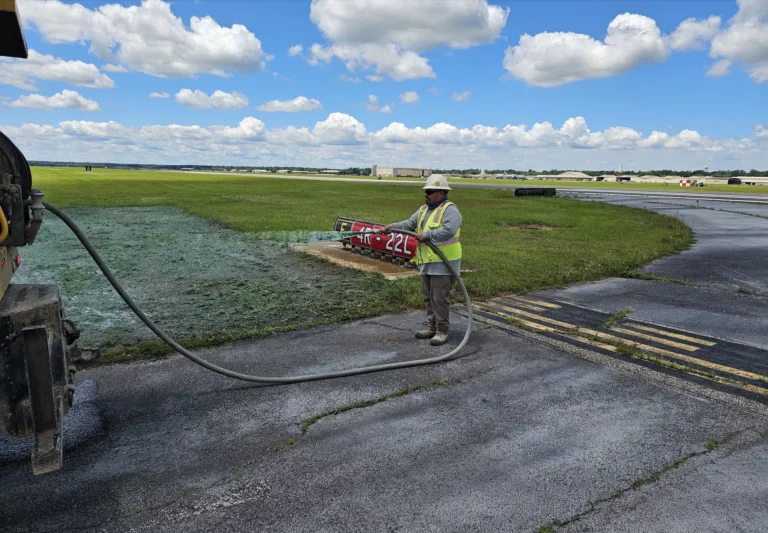
Yes. Compost blankets and hydroseeding are frequently used together, and the combination is among the most reliable erosion control specifications available for demanding sites. Hydroseeding applies the seed, tackifier, and base mulch in a uniform pass, and the compost blanket is applied over the top to provide surface protection, moisture retention, and soil amendment that supports rapid germination and sustained establishment. The two techniques are complementary rather than alternative.
Is Eco Express experienced with compost blanket applications?
Yes. Eco Express has pioneered the use of high-performance compost blankets for erosion control across the Eastern US and has extensive experience applying them across utility-scale solar, commercial development, federal, and military projects in North Carolina, South Carolina, and Virginia. The company has refined the specification, sourcing, and application process for compost blankets over more than two decades in the industry, since 2003, and uses them as a core component of its industrial-scale erosion control service.